#ffffff 0.8
#232323
#000000
#ffffff
#232323
#ffffff 1
#000000
#f47b20
#f47b20 1
#000000 1
#ffffff
#000000 1
#232323
#f47b20
#f47b20
#000000
#000000
Tertiary Background
#000000 0
Tertiary Text Color
#000000
Tertiary Button Border Color
#000000 0
#e91c24
#ffffff
#e91c24
#e91c24
#000000 1
#000000 1
#000000 0
#000000 0
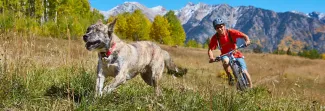
A dog running on a trail with a man biking behind the dog with mountains in the background.
Article Content Required

We often get questions on how to get that “Durango Dog,” which is a dog that can hike, bike, climb, and camp with you while staying well behaved. There’s nothing better than having a canine adventure companion, but where do you start? As we go over beginning training tips and theories, keep in mind that this type of training requires a good bit of time investment, but it is something that will most definitely pay off! 

When we take our dogs into the wilderness with us, we’re asking several things of them: stay with us, come when called, and stay out of trouble. From your dog’s perspective, there is a lot more going on! They’re hearing the following:

  • Do not engage with this very intriguing environment
  • Do not check out all these new smells
  • Do not stare at that squirrel in that tree or chase it
  • Do not say hello to those other people who look friendly
  • Do not say hello to that person’s dog who looks very fun and friendly 

You get the point! You are not only battling a very intriguing and reinforcing environment, you are also asking your dog to not perform instinctual behaviors, like smelling everything and staring at every movement in the trees. The key to overcoming this is to be more engaging than the environment, and to do this, you want a dog that truly enjoys working for you. Getting to this stage with your dog takes work. You must trust your dog and your dog must trust you.

So how do you get your dog to choose you above everything else? This is where the investment of your time comes in. Choose a training plan that works for you and your dog and stick with it. Not all training plans have to be the same—your dog’s skill set may not be the same as my dog’s. Regardless of the training plan though, begin with practicing good behavior. This typically starts with a leash and treats. The leash is to help keep your dog with you, and the treats help to reinforce focusing on you instead of your dog self-reinforcing with the environment. This doesn’t mean you will always have to have your dog on a leash. It’s just to start; the ultimate goal is to trust your dog off leash, assuming the place you are at doesn’t have leash rules. 

Here’s how to begin your training your pup to be an adventure buddy:

  1. Engage, engage, engage. No matter what happens in your environment, you want your dog to engage with you. This means you can recall them whenever you need to. To help your dog understand that you want them to come when called regardless of what is happening around them, you need to practice engaging them in all situations and environments. It’s important to establish these good behaviors and focus at home first. Then you can transition to right out of the front door (or out of the car). Have them sit, make eye contact, touch, or perform any of their skill set using treats. In this case, yes, they even get a treat for a simple sit. This gets them into a working-for-you mindset instead of an “I’m free!!!” mindset, which is very difficult to rein in.
  2. Get goofy! Drop your “this is going to be embarrassing” mindset. If you want to be more fun than your dog’s environment, you have to work for it. Play a “chase-me” game with a long line, letting them play with you as they would another dog. Get a tug and let them get their kicks out with you. Jump around, be fun, be loud, and be engaging! Warning to the men out there: Our experience has shown that using a high-pitched squeaky voice is often effective. You might need to practice this. I frequently tell my deep-voiced clients to try talking like a girl.
  3. Raise the stakes. As you raise the difficulty of the environment, you need to raise the amount of fun your dog is going to have with you. If you advanced from your front yard to a public park, get ready to use more treats and up the goofiness with your dog. If they learn that going to the park means they get to have fun and play with you, they will choose to engage with you because historically you have been more reinforcing to them. 
hd spontaneous adventures sarah sturm
Article Content Required

Sometimes travel plans aren’t what they call “well planned,” or planned at all. Often I find the best trips are the ones that blossom at 4 o’clock on a Friday. Those last-minute adventures are what my dog Norman and I live for! Though spontaneous trips don’t offer a lot of time or options for preparation, the following are tips we’ve learned along the way for making an “on the whim” trip go smoothly. With these tools in our pocket, no weekend needs to be “ho hum,” especially not when there’s a tail-wagging dog to share it with! 

1. Figure out where you’re staying

The first piece of business is shelter. Don’t stress, there are a number of options. It just depends on what your “glamping’” standards are. I find that staying with friends or family is the easiest and least pricey, though it can be stressful, especially if your dog likes sofa snacks or leaves little “presents” on the carpet. You don’t want to put your friends in that situation.

If staying with friends is out, I like to car camp. Norman loves to roam around while we hang out by the fire, plus who doesn’t love cuddling in a tent next to a stinky little tail-wagger? This gives us the flexibility to be the wild animals we are, but it does require a bit of planning and gear packing. If you plan to camp, check the weather — no one likes camping in negative 5 degrees, even if you have a fur coat. Also, be sure that the campsite is dog-friendly. A good place to start is National Park Paws, a website which provides pet policies for the American National and Federal Parks System.

There also are a number of affordable hotel/lodge options that allow dogs and love them as much as you do. This can be a great choice if you’re arriving somewhere in the middle of winter, say . . . in a blizzard. There’s a misconception that pet hotels equate to urine-stained carpet and fur-covered blankets; that’s not the case. Many are nice and create a special experience for you and your dog. There is usually some extra charge to bring your little buddy along, but the fees are usually nominal. It’s really just an extra token to say, “Thanks for vacuuming up that extra fur and sorry for the dog fart smell.” To find pet-friendly hotels, check out BringFido.com and GoPetFriendly.com. I also like to use TripAdvisor.com with the “pet friendly” option selected. 

Don’t think that you’re losing out on an adventure by choosing to stay in a hotel. Any type of travel can result in an adventure at any point! It’s always good to keep in mind that last-minute travel can be unpredictable, so be prepared to roll with the punches. Plus, taking your dog with you on any trip usually results in a more enhanced and amusing adventure. Staying in pet-friendly hotels can be really lovely too. It’s always a good time when you can jump on the beds with your dog. Honestly, life may not get any better than that!

2. Pack your gear

This is the fun part! How in the world are you supposed to pack for an adventure with six legs? Usually, when I’m “planning” the activities for the weekend, I can’t decide what our adventure together will entail, so I end up bringing everything I might need for every option. Some say this is poor planning, but I like to think I’m creatively preparing for whatever comes our way. For those of you who just cannot be bothered to choose between skiing, biking, snowshoeing, hiking or underwater basket weaving: I hear you, I feel you, and I know your struggles. 

  • Plastic bins: I like the ones with clear sides so that I can see all of my stuff, but these are not as durable as other models. So, it comes down to what you prefer: clear sides or durable. These bins are fantastic gear collectors for any adventure, as well as costumes and accessories (an obvious must-have).
  • Bungee cords to keep everything in place: I bungee things to the sides of my car, seats and anything that can hold stuff in place. You don’t want anything smushing your furry adventure buddy during a sharp turn!  
  • Secured dog kennel: Best practice is to have your dog in a secured kennel inside the vehicle or seat belted into place with a pet-appropriate seat belt.
  • First aid kit: Go ahead and keep that sucker in your car. It’s never a bad thing to have.  
  • Dog bin: This should include:
    • A copy of veterinary records
    • An extra leash
    • Poop bags (I recycle old grocery bags)
    • Dog bed or blanket
  • Doggy first aid kit:  
    • Hydrogen peroxide in case you need to make them barf something up they shouldn’t have eaten (consult with a veterinarian before administering)
    • Bandage materials in your human first aid kit will do, but if you want ones designed specifically for dogs
    • Tweezers, antihistamine for allergic reactions, and Kwik Stop to stop bleeding on broken nails
    • If you’re doing a snowy expedition, throw in some paw wax to protect those pads
  • Food for your pup: I like to count how many dog meals we’ll be gone for and literally put that many scoops, plus a little bit more than planned for backup, into a travel container. If you travel more often, then consider a portable food dispenser. If you’re testing the waters and don’t need another gear investment, then a container that seals well and won’t spill kibble into every nook and cranny of your car will do. Don’t forget the water bowl and treats! 

3. Pack your car

The subtle art of car packing is like real-life Tetris! The fundamentals to keep in mind are: Put the less urgent items in the more unreachable places and keep the things that you’ll need mid-drive or when you arrive in the wee hours of the night right up in the front. The other key piece is making enough room so that your pup is nice and comfy snuggled safely in their kennel or car harness in-between all of your gear.

Parting Words of Wisdom and Encouragement

I applaud you for taking on the task of embracing spontaneous travel with your pet. It might seem like a lot of gear (and it is) and it might seem like a risk (and it is). However, the result of all of your efforts is something really special. I always come back to this quote by Albert Einstein: “A ship is always safe at the shore — but that is NOT what it is built for.”

That quote motivates me when I want to take the easy route and travel alone (or with humans). It helps me remember that every single time I bring Norman on the journey, it is richer and more vibrant than if I had left my best adventure buddy at home. There is something magical that happens when I take those extra steps so Norman can come. He knows how special it is too, and he shows his appreciation in subtle but meaningful ways. I like to think that when he sits on command, comes back to check on me on the trail, and eats a little less poop than he’d prefer, that’s Norman’s way of saying, “Thank you for taking me along.” 

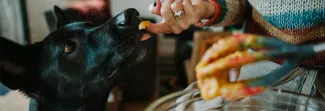
A dog getting a taste off a baking mixer
Article Content Required

To celebrate pumpkin season, we want to share this awesome recipe for Pumpkin Apple Pupcakes for your pup. Natalia and Willow from The Labs & Co show us how it’s done — they make these pupcakes look too good to pass up! Disclaimer: your dog’s GI may be upset from food they’re not accustomed to and remember that treats should only be 10% of calories in order to keep a complete and balanced diet.

Pumpkin Apple Pupcake Dog Treats Recipe

Recipe by Kelli Mlinarik Marko

Prep Time: 10-15 mins
Cooking time: 15-20 mins
Yield: 24 pupcakes

Pupcake Ingredients

  • 3/4 cup rolled oats
  • 3/4 cup unsweetened apple sauce
  • 3/4 cup unsweetened canned pumpkin (NOT pie pumpkin)
  • 1 medium apple; peeled and small diced
  • 1 teaspoon cinnamon
  • 3 eggs

Frosting Ingredients

Directions

  1. Preheat oven to 350 degrees.
  2. Mix oats, cinnamon, and flour. Pulse rolled oats ahead of time in a food processor if you want a finer texture.
  3. In another bowl, mix the pumpkin, apple sauce, eggs (slightly beaten), and apple.
  4. Slowly combine and mix the wet and dry ingredients. It will be a very thick mixture.
  5. Scoop batter into a greased mini-muffin tin. Pile the pupcakes up high as they will not rise. Bake for 15-20 minutes, until you see the tops just barely starting to brown. Remove from the oven, transfer to a cooling rack, and let cool completely (you can leave them overnight if you wish).
  6. To make the frosting, whisk together the cream cheese and apple sauce. If the frosting is not smooth enough, add one more tablespoon of apple sauce. Spread on pupcakes and decorate with Zuke’s Mini Naturals! 
A gingerbread cookie with a dog sitting below it
Article Content Required

Try out these delicious dog-friendly Gingerbread Cookies straight from the Zuke’s Test Kitchen. Disclaimer: your dog’s GI may be upset from food they’re not accustomed to and remember that treats should only be 10% of calories in order to keep a complete and balanced diet.

Cookie Ingredients

  • 2 cups oat flour (or any non-wheat baking flour)
  • 1 tsp ground cinnamon
  • 1 tsp ground ginger
  • 2 large eggs
  • 1/2 to 1 cup canned, pureed pumpkin (NOT pumpkin pie filling)
  • 2 tbsp blackstrap molasses

Icing Ingredients

  • 4oz low- or fat-free cream cheese
  • 1 tbsp honey
  • 1 to 2 tbsp plain yogurt (low or fat free)
  • 1 to 3 tbsp flour (if needed to thicken)
  • Optional: 2-3 drops natural food coloring

Decorations

Directions

To make the cookies:

  1. Preheat oven to 350°F.
  2. Combine flour, cinnamon and ginger in a bowl and mix well.
  3. Add the eggs, pumpkin and blackstrap molasses to the bowl and blend until it forms a ball of dough.
  4. Place ball of dough on a non-stick baking mat, parchment paper or a clean work surface sprinkled with flour.
  5. Place a piece of parchment paper over the ball of dough and use a rolling pin to flatten the dough until it is approximately 1/4-inch thick; Note: Separate dough into two batches for easier rolling.
  6. Use a cookie cutter to cut out shapes and place them on a non-stick cookie sheet.
  7. Bake cookies for 15 minutes at 350°F. Then flip cookies over and bake on other side for another 15 minutes.
  8. Cool completely before icing.

To make the icing:

  1. Place cream cheese, honey and yogurt in mixing bowl and mix until smooth.
  2. Mix in one tablespoon of flour at a time until you reach your desired consistency for spreading or piping onto cookies.
  3. Optional: add 2-3 drops of food coloring to icing and mix.

To decorate:

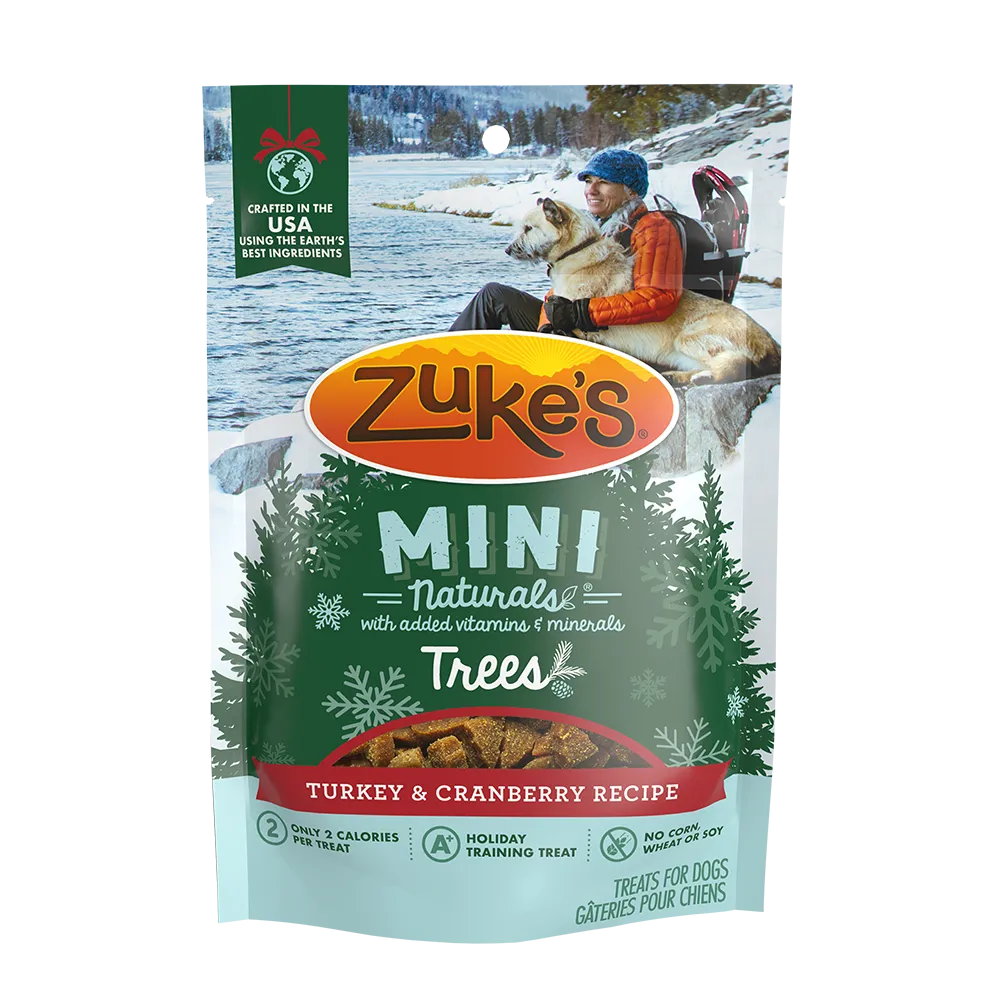
  1. Once cookies are completely cooled, decorate with icing as you wish, and top icing with Zuke’s Mini Naturals Trees and Zuke’s Mini Naturals! 
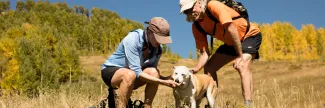
yellow dog on hiking trail with two humans
Article Content Required

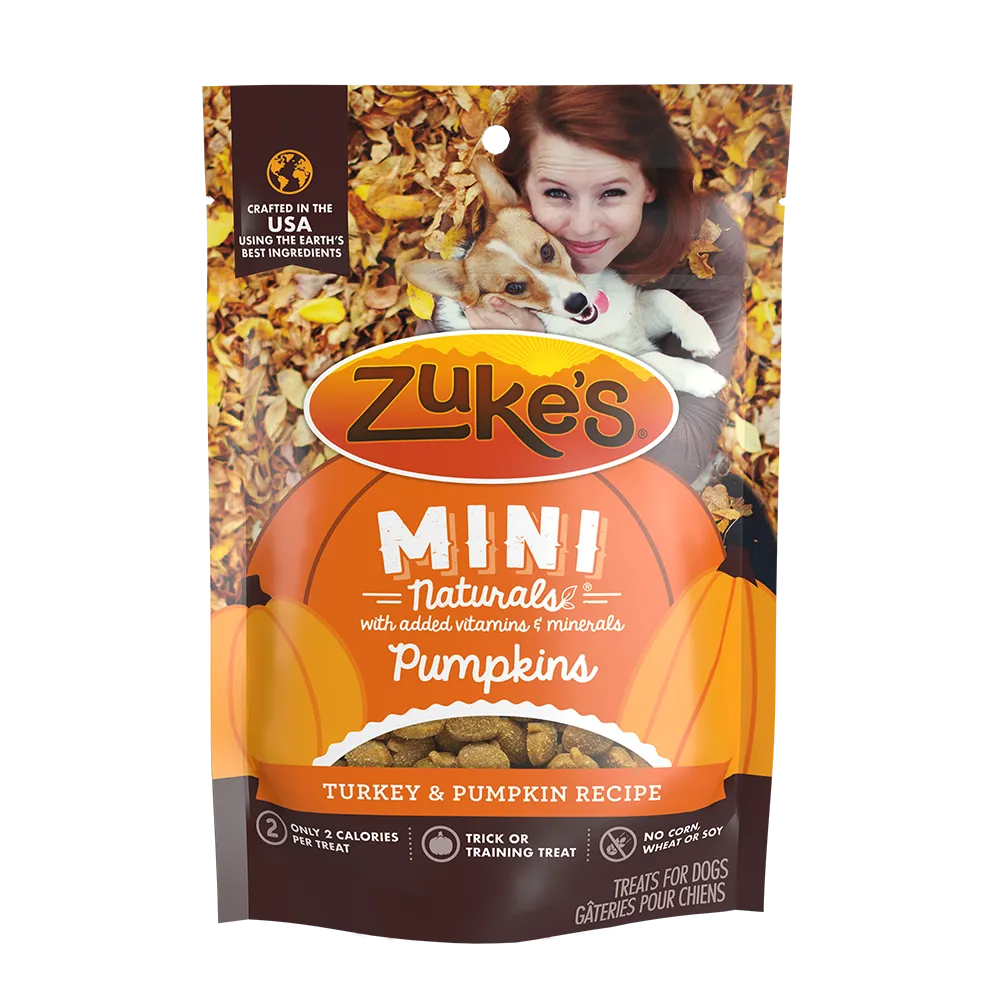
It’s that time of year — the time of “pumpkin everything:” pies, lattes, scented candles and... wait for it... dog treats! These seasonal treats are a highly nutritious addition to your pooch’s day and super easy to make (no baking required). Start with a delicious seasonal ingredient for your pup: Pumpkin! Add in oatmeal and peanut butter to hold it all together. And don’t forget the star ingredient, the Mini Naturals Pumpkins! Disclaimer: your dog’s GI may be upset from food they’re not accustomed to and remember that treats should only be 10% of calories in order to keep a complete and balanced diet.

Howl-o-ween Pumpkin Bites

Note: When cooking pumpkin treats for your dog, be sure to use all-natural pumpkin puree instead of pumpkin pie filling, which has added sugar and other ingredients. Since we use some maple syrup (or honey if you prefer) in this recipe to bind the treats together, we don’t want to add any more sugar!

Ingredients

  • 3 cups dry, uncooked oatmeal
  • 1 cup all-natural pumpkin puree (not pumpkin pie filling, which has added sugar)
  • 1 cup all-natural peanut butter (or almond butter)
  • 1/2 cup pure maple syrup or honey
  • 1/2 tsp cinnamon
  • 1/2 tsp pumpkin pie spice
  • 4-6 tbsp flaxseed powder (you can sub coconut flour or chia seed flour)
  • 1 cup Mini Naturals Pumpkins (plus extra for toppings)

Directions

  • Combine all ingredients together in a medium bowl until very thoroughly mixed
  • Roll into balls about 1” in diameter
  • Top with extra Mini Naturals Pumpkins
  • Place on a cookie sheet covered in parchment paper and freeze one hour
  • Store in airtight container and keep refrigerated for up to 1 week
A dog sitting waiting for a dog cupcake treat
Article Content Required

They say the quickest way to a dog’s heart is through his stomach. Show your pooch some love with our “You-Make-My-Heart-Beet” pupcakes. We tried out this recipe in our newly renovated test kitchen, and the pupcakes were a huge hit with the office dogs. Disclaimer: your dog’s GI may be upset from food they’re not accustomed to and remember that treats should only be 10% of calories in order to keep a complete and balanced diet.

‘You-Make-My-Heart-Beet’ Pupcakes  

Original recipe by Kelli Mlinarik Marko and adapted by the Zuke’s Pack

Prep Time: 10-15 mins
Cooking time: 15-20 mins
Yield: 24 pupcakes

Pupcake Ingredients  

  • 1 cup whole wheat flour
  • 3/4 cup rolled oats
  • 1 teaspoon cinnamon
  • 3/4 cup unsweetened apple sauce
  • 3/4 cup unsweetened canned pumpkin (NOT pie pumpkin)
  • 1-2 large beets
  • 3 eggs

Frosting Ingredients  

  • 1/2 cup cream cheese at room temperature
  • 1 tablespoon applesauce
  • 1 tablespoon beets (leftover from batter)
  • Zuke’s Mini Naturals for toppers

Directions

  • Preheat oven to 350 degrees.
  • Quarter and steam 1-2 large beets until soft. Chop finely in a food processor or blender.
  • Mix oats, cinnamon, and flour. Pulse rolled oats ahead of time in a food processor if you want a finer texture.
  • In another bowl, mix the apple sauce, pumpkin, and eggs (slightly beaten).
  • Slowly combine and mix the wet and dry ingredients. Gradually add about 1/4-1/2 cup of the beets to add color and consistency to your liking.
  • Scoop batter into a greased mini-muffin tin. Pile the pupcakes up high as they will not rise. Bake for 15-20 minutes, until you see the tops just barely starting to brown. Remove from the oven, transfer to a cooling rack, and let cool completely (you can leave them overnight if you wish).
  • To make the frosting, whisk together the cream cheese, apple sauce, and leftover beets for color (start with a little — about a 1/2 teaspoon — as it doesn’t take much to make a bright, pink color). If the frosting is not smooth enough, add one more tablespoon of apple sauce. Spread on pupcakes and decorate with Zuke’s Mini Naturals
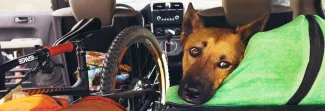
A dog sitting on a bed in a tent
Article Content Required

It’s been eight years since I adopted Max from a rescue group at a farmers market in Long Beach, California. Little did he (or I, for that matter) know that we would be embarking on a seemingly never-ending journey together. Throughout the years, we have made some mistakes, learned some lessons, and found some amazing spots to camp. If you are thinking about traveling with your pet on a road trip, here are some tips that will help in planning and taking the next step for your journey with your four-legged best friend. I can’t imagine life on the road without Max.

Pack Their Bag

It makes things so much easier when everything they need is in one place. Remember to pack food, toys, poop bags, and treats, as well as their favorite bed or blanket. It’s important for our dogs to have a space where they feel comfortable.

Bring Vaccination Records

I’ve had Max’s shot records handy and for good reason: many state parks require to see shot records in order to camp. Although it was only in a few places, I was thankful that I had records with me. Max is microchipped and has an ID tag, just in case.

Watch Out for “No Dogs Allowed”

More often than not, dogs won’t be allowed on national or state park trails. Do your research so you won’t be disappointed on the restrictions when you enter a park. I have found that your best bet for letting your furry friend roam with you are national forests and Bureau of Land Management (BLM) land. You can find campsites on our public lands through their website at blm.gov/. If you are tired of camping, look for a nearby pet-friendly hotels. Max and I have stayed in both, and they are a nice way to recharge after camping for extended periods of time. 

Image
various photos of dogs and humans in vehicles or outdoors

Photos courtesy of Alison Turner. 

Get Out of the Car

Remember to move around outside of the car as much as you can. Even if you are planning a long driving day, it’s important to take your dog out as much as you get out. I always take Max for a walk when we stop for gas. Having a routine is important to your pet. Max and I have a walking routine each morning so things seem familiar to him. I think it’s comforting for your dog to know that they will be walked and fed each morning, even though they don’t know what the day has in store.

For ideas on how to incorporate some training into your road trip adventures, check out our article Training Tips For Road Trips With Your Dog.

Follow the Weather

Remember that your dog can get overheated fast in summer months. It’s important to keep them cool and supply as much water to them as you drink. Use common sense and don’t leave your pet in a hot car, and remember to bring blankets and sweaters for cold weather.

With just a few adjustments based on your needs, you and your best friend will have the time of your lives!

A dog sitting next to a man in a field
Article Content Required

Whether you’re training, re-enforcing behaviors because dogs, just like kids, need constant reminders, or placing tasty morsels in puzzle toys for mental and physical stimulation, healthy treats are an important part of your pooch’s nutrition and daily wellbeing.  

Treats have calories too and nutritionists say they shouldn’t exceed 10% of your dog’s daily calorie intake. So, for your dog to benefit from tasty rewards, choose delectable, irresistible morsels with a very low-calorie count.

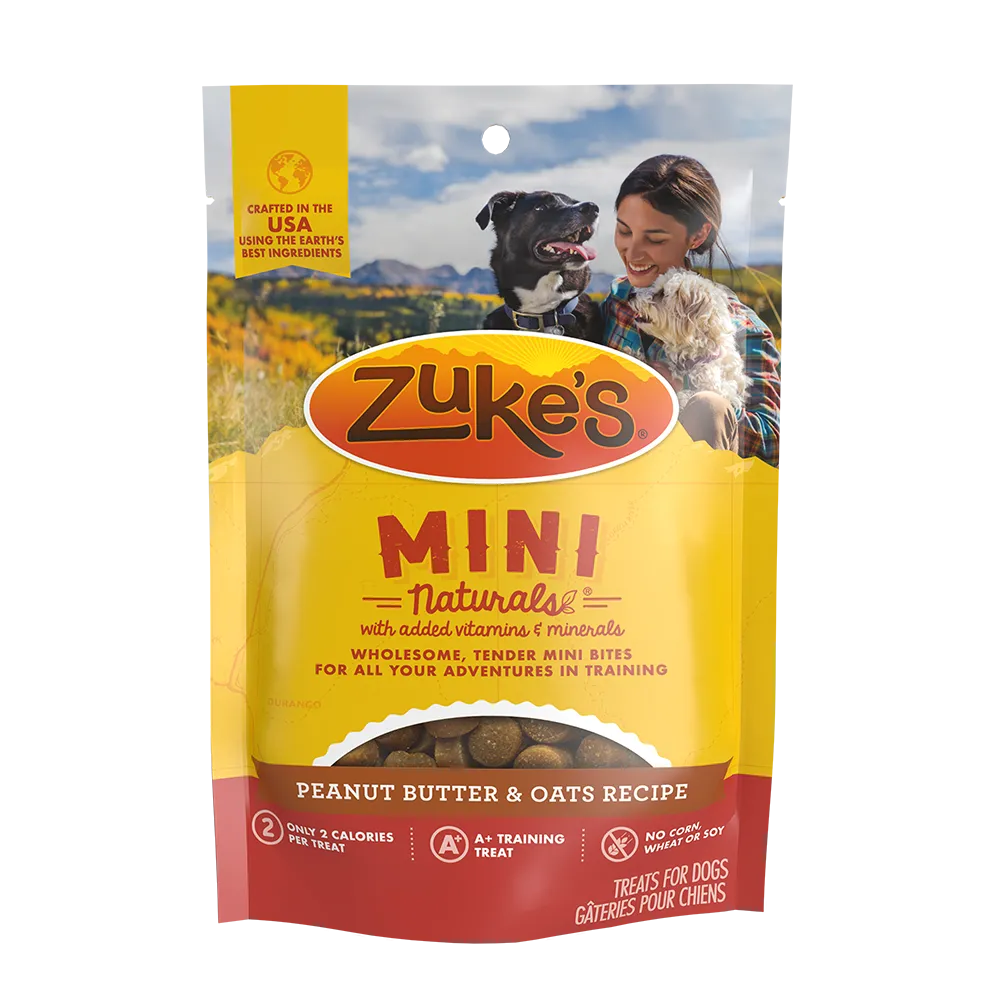
Zuke’s Mini Naturals fit the bill because they are less than 3 calories per treat. Made with top quality proteins such as chicken, beef, pork, rabbit, duck, and peanut butter. Other ingredients include fresh fruits and vegetables along with vitamins and minerals for a delicious tidbit. Further, the “secret ingredient” is peace of mind, knowing they don’t contain any corn, wheat, or soy, and are free of fillers, by-products, and artificial colorants. In addition, part of your dog’s daily ration of kibble can be used as treats.

How to Dispense Treats

It’s a great idea to invest in a treat bag that fits into a pocket in an “open” position so that it’s easy to reach inside. Other alternatives include one that clips onto a belt or slung across the body and sits on the hip. Fill your treat bag with your dog’s favorite flavor or mix it up to add to the surprise. Keep what you are not using in a sealed container to preserve freshness. A great treat bag is an essential part of your dog’s outdoor gear. He can even carry extra treats if he is wearing an outdoor backpack.

Treats are Rewards

When you first begin basic training, even a five-minute session can involve a lot of treats. That’s why good nutritional content is so important. Having the dog a little hungry when starting training can encourage them to be more interested. If you shoot over your dog’s daily allowance, you can always substitute with kibble taken from his daily food intake to complete the session. Never substitute with human snacks. Treats are synonymous with positive re-enforcement and the whole experience is supposed to be a feel-good one for both you and your dog. It’s for this reason that dog trainers no longer refer to basic learning behaviors as “commands” but instead, now call them “cues.”

Making Treats the Equivalent of a Bedtime Story

Dogs are fast learners and quickly learn the word “treat”. Once your dog is trained, treats can also be placed in a puzzle toy to offer mental and physical stimulation especially when they are home alone. Consider saving a couple from the daily allowance to give before bedtime. Whether you’re at home or curling up for the night besides a campfire, for your pooch, this ritual is the equivalent of a bedtime story along with a goodnight hug. 

Two dogs in a field
Article Content Required

In Summer Fun Safety Guide: Staying Safe on the Trails, I touched on things to keep in mind when enjoying the great outdoors with your pup. In this post, allow me to bring some attention to matters closer to home — literally, your own backyard!

Barbecues

I don’t know about you, but I love backyard barbecues. So do my dogs! Meat on the grill, flying Frisbees, music, friends, laughter…all key ingredients in the recipe for a good time. If your dog accompanies you to your next backyard event, I’d like you to be cautious of a few things:

  • Corn cobs: Unless chewed into tiny pieces — and most dogs don’t — these barbecue staples can easily obstruct the intestines.
  • Rib bones: When improperly chewed, rib bones can block the gut and warrant emergency veterinary care. Also rib meat can be too fatty for dogs with sensitive stomachs.
  • Skewers: Bamboo or metal shish kabob skewers are coated in tasty juices that attract curious and hungry pups. Just imagine what could happen if a dog swallows one. It’s not good. Take my word for it.

Fido’s Flowers

Some outdoor plants warrant erring on the side of caution. It may depend on the area of the world you inhabit as to which of these you may encounter, but do yourself and your dog a favor and file these names away to help keep your dog out of trouble in the yard:

  • Lily of the Valley and Foxglove: Once used to create human cardiac medications, a compound in these can cause seizures, heart arrhythmias, and gastrointestinal distress.
  • Sago Palm: Be particularly aware of this one. It’s very toxic to the stomach and liver. Seek immediate veterinary care if your dog ingests this plant.
  • Crocus: Both spring and fall varieties are poisonous, but the fall variety warrants more caution.
  • Lilies: Especially toxic to cats, lily ingestion by a cat or dog can cause severe stomach pain and/or kidney damage.
  • Also notable: Oleander, rhododendron, azalea, cyclamen, amaryllis, yew, and chrysanthemum. For a comprehensive list of toxic plants, visit petpoisonhelpline.com.

Yard Chemicals

When protecting your home from small creatures of the verminous variety, read the labels of the products you are using! For example, some mouse and rat baits can inhibit normal blood clotting in dogs (this is treatable), while some other products cause severe permanent neurologic damage (not treatable unless caught very early). Know the toxicity of the products you are using and keep them suitably away from your furry family members. Here are a few more items to consider:

  • Compost: Decomposing organic matter smells fabulous to dogs — but it can contain molds called mycotoxins that also can cause neurologic problems.
  • Mulches: Here is another area where geography plays a part in your dog’s risk of exposure. Fresh pine mulch when highly resinous (sap-rich!) is irritating to the stomach if eaten. Cocoa mulch is made from cocoa bean shells. (Read: It’s chocolate!) It contains the same worrisome compounds found in chocolate candy. Plus, it smells good so dogs like to eat it!
  • Soil Additives and Fertilizers: Both organophosphates (conventional fertilizer) and blood and bone meal (more organic-style products) are toxic, the latter having a pleasant smell for dogs. I recommend keeping your dog inside when using these products. Thoroughly water the products into the soil before allowing your dog back into the area.

Summer should be about enjoying the sunny skies, the warm evenings, and spending quality time with those you love. By being cautiously aware of potential dangers to your dog, you should be able to enjoy the season to its fullest.

Disclaimer: This information is educational in nature and is not intended as a substitute for professional medical prevention, diagnosis, or treatment.  

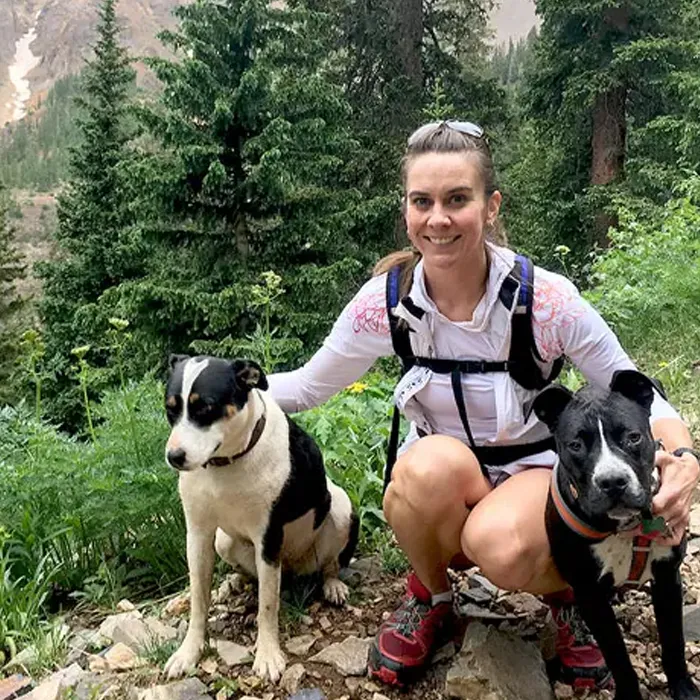
A woman and a dog next to each other by a river
Article Content Required

Are you looking for love? Then look no further than your local animal shelter or rescue. Are you more into online dating? Check out petfinder.com. Your soul-mutt is waiting for you!

In 2006 I adopted the two loves of my life: Tonto, an outgoing border collie mix, and Finn, a shy and emotional border collie mix. In the 11+ years I have had them, they have never once broken my heart and the only tears they have ever caused are from joy. They may not bring me flowers or take me to the movies, but they ease my heart, make me smile daily, and take me on the best adventures.

Just like any real relationship, there is a fair share of give and take. They surely do not clean up after themselves and I am always responsible for their meals, exercise and “bathroom” clean up. Sounds like a lot of work, right? It is. It is also a lot of reward.

Before I adopted my dogs, I wasn’t really an active person and I absolutely wasn’t familiar with the strength of a bond between an animal and their human. If I am sad, they sense it. If I am happy, they feel it. Loyalty? Forget about it—you are the only thing that matters to them. I swear the phrase, “Actions speak louder than words” was written about dogs. Though unspoken, my conversations with them are the best I have ever had because they speak directly to my heart.

Through them I have learned to love myself more. I have lost weight. I have become passionate about hiking and adventure, and I am able to see myself a little bit more clearly. We have hiked hundreds of miles together. We have been to 27 states and seven national parks together. They greet me each morning with a kiss and they make sure to not forget at night either. Dogs may not be able to help pay the bills or take you out for a nice dinner, but after all, isn’t it long-term commitment you are really looking for?

According to the ASPCA, approximately 3.1 million are dogs enter shelters each year and approximately 1.2 million euthanized. Of the dogs entering shelters, approximately 64% are adopted, 13% are euthanized, and 23% of dogs are returned to their owners. It’s always a perfect time to add more love to your life. You may feel like you are the one doing the rescuing, but I assure you, they rescue you right back!

Check out more adventures from Bryce LaDuc and her pups on Instagram.